
A regional working session brings together nearly 190 civil society and Indigenous Peoples and Local Communities representatives to identify priority policy processes, barriers to engagement and practical actions for strengthening their influence across the Congo Basin.
On 4 September 2026, over 190 participants from civil society organizations (CSOs) and Indigenous Peoples and Local Communities (IPLCs) across the Congo Basin came together for a virtual working session focused on strengthening their voice and influence in forest, climate and biodiversity policy processes.
The session forms part of the Forest People and Climate (FPC) project, funded by the Climate and Land Use Alliance (CLUA) and implemented by the Forest Service International Foundation (FSIF) with technical support from SINREX Sustainable Solutions, Cameroon. The initiative seeks to strengthen the capacity, coordination and influence of CSOs and IPLCs to engage more effectively in policy processes at national and regional levels.
Bringing together organizations from the five francophone countries currently covered by the initiative, the session provided a platform to exchange experiences, identify common challenges and define practical ways of moving from participation towards greater influence.
The Executive Secretary of COMIFAC, H. Maïdou, joined the session and highlighted the importance of initiatives that strengthen the role of civil society in forest and environmental governance. He reaffirmed COMIFAC’s long-standing commitment to supporting civil society engagement and noted the ongoing work to refine the COMIFAC Plan de Convergence in ways that respond to key priorities and orientations for the region.
“A strong forest governance framework requires the meaningful participation of civil society and communities who depend on forests. Initiatives that strengthen their capacity to engage and contribute to policy processes are therefore essential to advancing our shared objectives in the Congo Basin.” — COMIFAC Executive Secretary Hervé Maïdou.
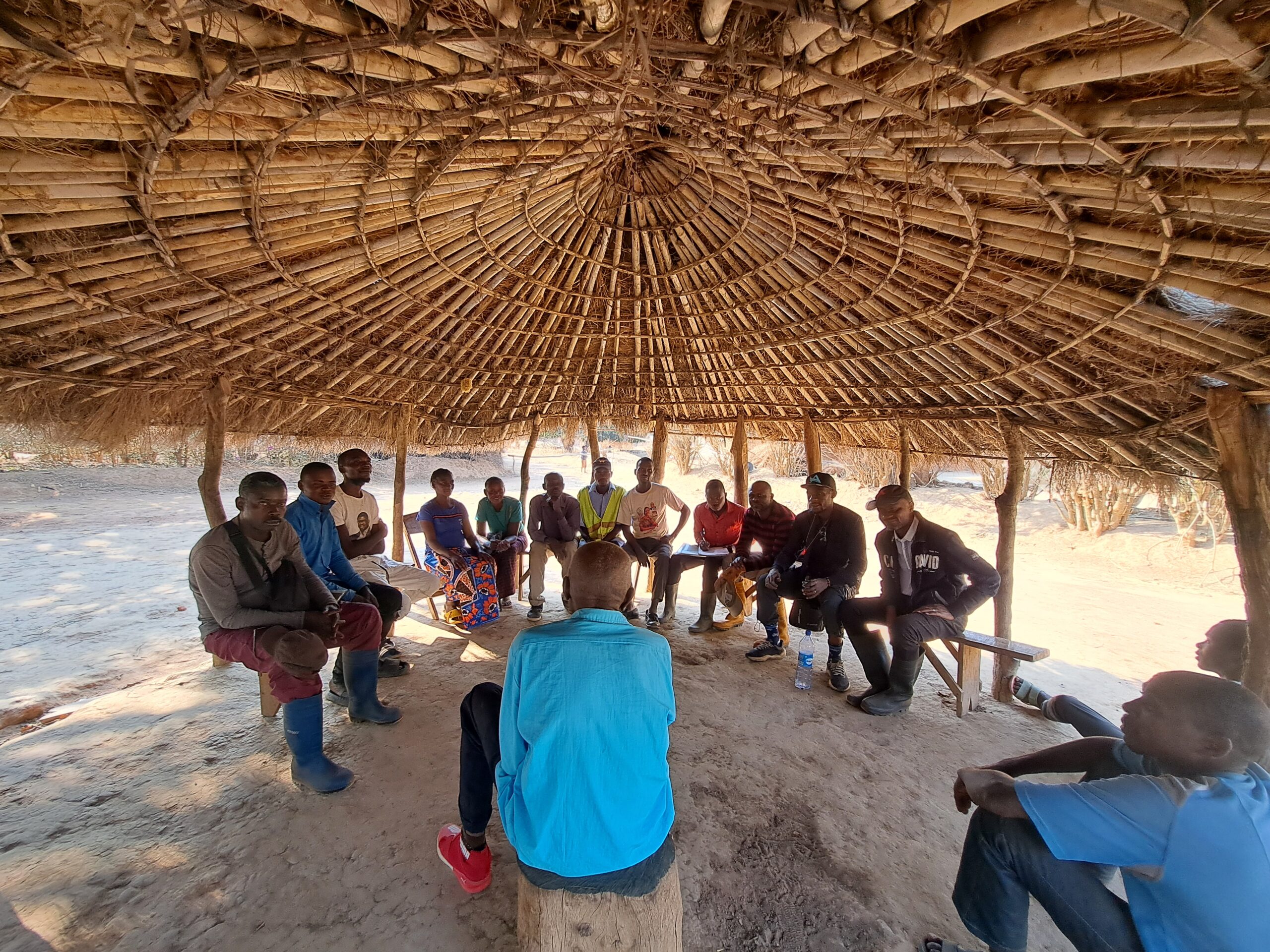
Four Questions shaping the Conversation
Rather than a conventional presentation-based workshop, the session used interactive exercises, facilitated group discussions, and mapping activities to capture participants’ experiences and perspectives.
Four central questions guided the discussions:
The discussions generated important insights into both the opportunities and challenges facing CSOs and IPLCs seeking to influence policy across the Congo Basin.
1. Identifying where engagement matters most
The first exercise focused on identifying the policy processes that matter most to CSOs and IPLCs and understanding where organizations are currently investing their efforts.
Participants identified policy processes across a range of interconnected areas, including forest governance, climate change, biodiversity conservation, land-use planning and community rights. The discussions demonstrated that organizations are engaging across these areas in ways that increasingly recognize the links between forests, climate, biodiversity and the rights and livelihoods of local communities.
At the regional level, the COMIFAC forest policy framework and the Plan de Convergence emerged as important spaces for engagement. At national and local levels, participants highlighted a range of policy and planning processes where CSOs and IPLCs seek to contribute evidence, represent community perspectives, influence decisions and monitor implementation.
The mapping exercise also helped identify areas where engagement is already relatively strong, as well as policy spaces where greater CSO and IPLC participation could make a significant difference.
“Early CSO and IPLC engagement is a priority because it aligns policy priorities with people’s real needs, increases public acceptability, and reduces the risk of inefficient or unjust policies that fail to address local realities.” — COMIFAC Executive Secretary Hervé Maïdou.
Key takeaway: The challenge is not simply to participate in more processes, but to identify the policy spaces where CSO and IPLC engagement can have the greatest impact.
2. What makes engagement successful?
The second question explored the strategies, approaches, and conditions that enable effective engagement.
Participants emphasized the importance of being well–informed, technically prepared, and organized before entering policy discussions. Access to timely information, understanding how policy processes work, and identifying the right entry points were seen as essential to ensuring that participation translates into meaningful contributions.
The discussions also highlighted the value of relationships and sustained engagement. Effective influence is rarely achieved through participation in a single consultation or meeting. It requires continued interaction with policymakers, regional institutions, technical agencies, development partners and other stakeholders.
Participants further pointed to the importance of coordination among CSOs and IPLCs. Working collectively can increase visibility, reduce duplication and strengthen the evidence and messages brought into policy discussions.
The discussions also underscored the importance of ensuring that women, Indigenous Peoples and young people are not simply represented, but meaningfully involved in shaping policy positions and advocacy priorities.
“Our organisations are already involved in numerous political and socio-economic processes. The real question is how we can ensure that our involvement takes place at a sufficiently early stage, that it is based on factual data (relevant and reliable), and that it translates in practice into decisions reached by broad consensus that reflect the realities of communities on the ground.”- Dr. Landing Mane — Observatoire Satellital des Forêts d’Afrique Centrale (OSFAC), RDC.
Key takeaway: Effective influence requires more than an invitation to participate. It depends on information, technical capacity, relationships, coordination, and sustained engagement.
3. What is holding organizations back?
The third question turned the discussion towards the challenges that continue to limit the ability of CSOs and IPLCs to participate effectively and influence policy outcomes.
Several common barriers emerged across countries and organizations.
Limited financial and human resources remain a major constraint. Many organizations have limited capacity to follow lengthy policy processes, attend meetings, conduct technical analysis,or sustain advocacy over time.
Participants also identified limited access to relevant and timely information as a significant challenge. Without access to policy documents, technical data, and information on upcoming processes, organizations can find it difficult to prepare their positions or engage at the right stage.
Another recurring issue was the limited recognition of CSOs and IPLCs as legitimate and consistent stakeholders in some policy processes. Participants noted that consultation does not always translate into meaningful consideration of their inputs.
The discussions therefore pointed to a broader challenge: moving from being consulted to being able to influence decisions.
“For many organisations, the challenge is not lack of commitment. It is the lack of resources to stay engaged throughout long and complex policy processes. We need sustainable support that allows organisations to remain at the table” — Augustine Yassiolo, Coordonnatrice de l’ONGPASSA de RCA
Key takeaway: Strengthening participation requires addressing structural barriers—not only building the capacity of individual organizations.
4. What support is needed to strengthen engagement?
The final question focused on the practical support that could help organizations strengthen their engagement and influence.
Participants identified a need for practical, accessible, and continuous support, rather than one-off capacity-building activities.
The proposed areas of support include:
A key outcome of the session was therefore a shared recognition that capacity building, knowledge sharing and coordination need to go hand in hand.
“We must encourage networking and the sharing of experiences amongst civil society organisations. These exchanges are essential for learning from one another, strengthening our practices and building partnerships, alongside direct support for CSOs.” — Ida Jilles BawaloMbazokouba, Programme Coordinator, ONG MINAPYGA, Gabon.
Add comment